Reflections from UNGA81 and New York Climate Week
In these challenging times, when geopolitics seem more discordant than they have been in generations,…

The world is navigating a period of profound disruption. The institutions, alliances and systems that have underpinned global stability for decades are being tested by overlapping geopolitical, economic, technological, environmental and social shocks. Governments are under pressure, economic blocs are redefining relationships, and conventional development, business and governance models are increasingly struggling to respond to the complexity of the challenges before us.
In recent years, a growing inter-disciplinary trend has emerged, with agronomists, financiers, climate scientists, health experts and technologists increasingly sharing the same table. What is becoming clear is that the crises of our time no longer fit neatly within a single sector, ministry, industry or institution. Today’s challenges are interconnected, and therefore our solutions must be as well.
The Risk of Industry Thinking
Yet many of our responses remain organized around silos. Food system conversations often focus primarily on agriculture. Energy discussions rarely include nutrition experts. Technology forums seldom engage development financiers, and health-sector meetings could benefit from drawing in logistics providers, insurers and digital innovators.
The result is predictable. We design interventions that address symptoms while leaving underlying system constraints untouched.
A fertilizer shortage becomes an agricultural issue rather than an energy, finance and trade issue. A health emergency becomes a medical problem rather than a mobility, logistics and governance challenge. Youth unemployment becomes an education problem rather than a market systems challenge.
The reality is, today’s most pressing challenges sit at the intersection of multiple sectors. No single government ministry, company, donor agency or civil society organization possesses all the tools required to address them.
Convening Across Systems
This moment calls for a different model of engagement. We need convenings that move beyond sector-specific dialogue and toward systems-oriented collaboration.
In as much as conversations are good, but we now need platforms designed to create action.
Platforms that are working groups sharing outcomes, where food system leaders are alongside energy experts, technology innovators, trade specialists, investors, youth leaders and policymakers. Platforms focused not only on identifying problems but on co-creating solutions.
The future belongs to ecosystems, not institutions acting alone.
From Dialogue to Co-Creation
The most successful collaborations of the next decade will likely be those that can do three things simultaneously:
1. Build Shared Understanding
Complex challenges require stakeholders to see the entire system rather than their individual part within it. Convenings create opportunities to connect perspectives, align assumptions and identify leverage points that are often invisible when organizations work independently.
2. Co-Create Programs
Rather than launching parallel initiatives, partners should jointly design programs that combine comparative advantages. Governments can provide policy support, while private sector actors contribute innovation and market access. Development partners can de-risk investments, civil society can ensure inclusion and accountability, and research institutions can generate evidence and learning.
3. Unlock Co-Investment
Financial capital often remains fragmented across sectors and institutions. Cross-sector platforms can help identify opportunities for blended finance, pooled funding and coordinated investment approaches that address system-level challenges.
The future will require not only bigger investments but smarter, more aligned investments.
Where This Shift Is Already Taking Shape
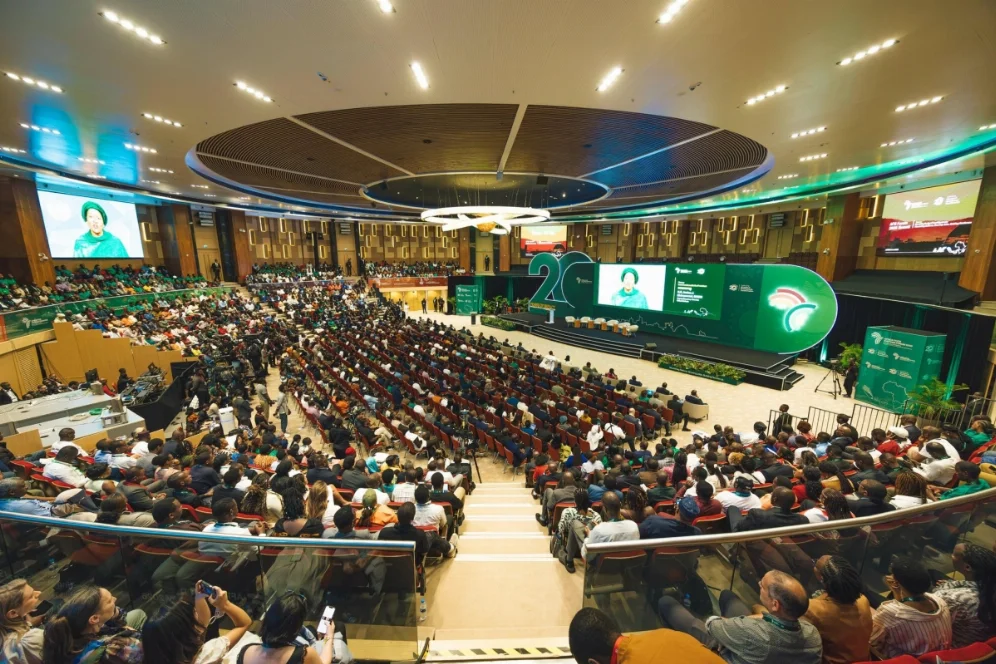
These ideas are not abstract. At this year’s Africa Food Systems Forum in Kigali, Rwanda, I supported convenings that brought them into sharp focus.
Take livestock for instance. Animals, markets and disease cross borders, yet the sector is still managed largely within them. At the Ministerial Deep Dive on Livestock, ministers from eight countries recognised that fragmented national approaches cannot deliver transformation. Regional markets, deeper trade and greater investment depend on trade, finance and infrastructure working together, not on any single ministry of agriculture.
Farmers face the same problem. Too often treated as beneficiaries rather than entrepreneurs and partners, smallholders need finance, insurance, climate-resilient technologies, infrastructure and markets to come together at once.
Parliamentarians pinpointed where this breaks down, which is between political commitment and budgetary action. Outdated policies, institutional silos and weak oversight leave national budgets out of step with the priorities of farmers, women and young people.
The issues are connected, but the decision-making is not. Farmers belong in the rooms where policy and budgets are set, and regional livestock ambitions need aligned financing and legislation.
The Missing Ingredient: Mutual Accountability
Perhaps the most important outcome of effective convening is mutual accountability. Too many partnerships end with declarations and commitments that are rarely measured. Partners must jointly define outcomes, measure progress transparently, and regularly review what is working and what must change. Above all, they should hold one another accountable and share ownership of results.
The question is no longer whether we can afford to collaborate differently, the question is whether we can afford not to.

In these challenging times, when geopolitics seem more discordant than they have been in generations,…
The 30th Session of the Food and Agriculture Organization of the United Nations (FAO) Committee…